
About the company
A pork processor in Huesca, Aragón, with a catalogue written as coded specifications
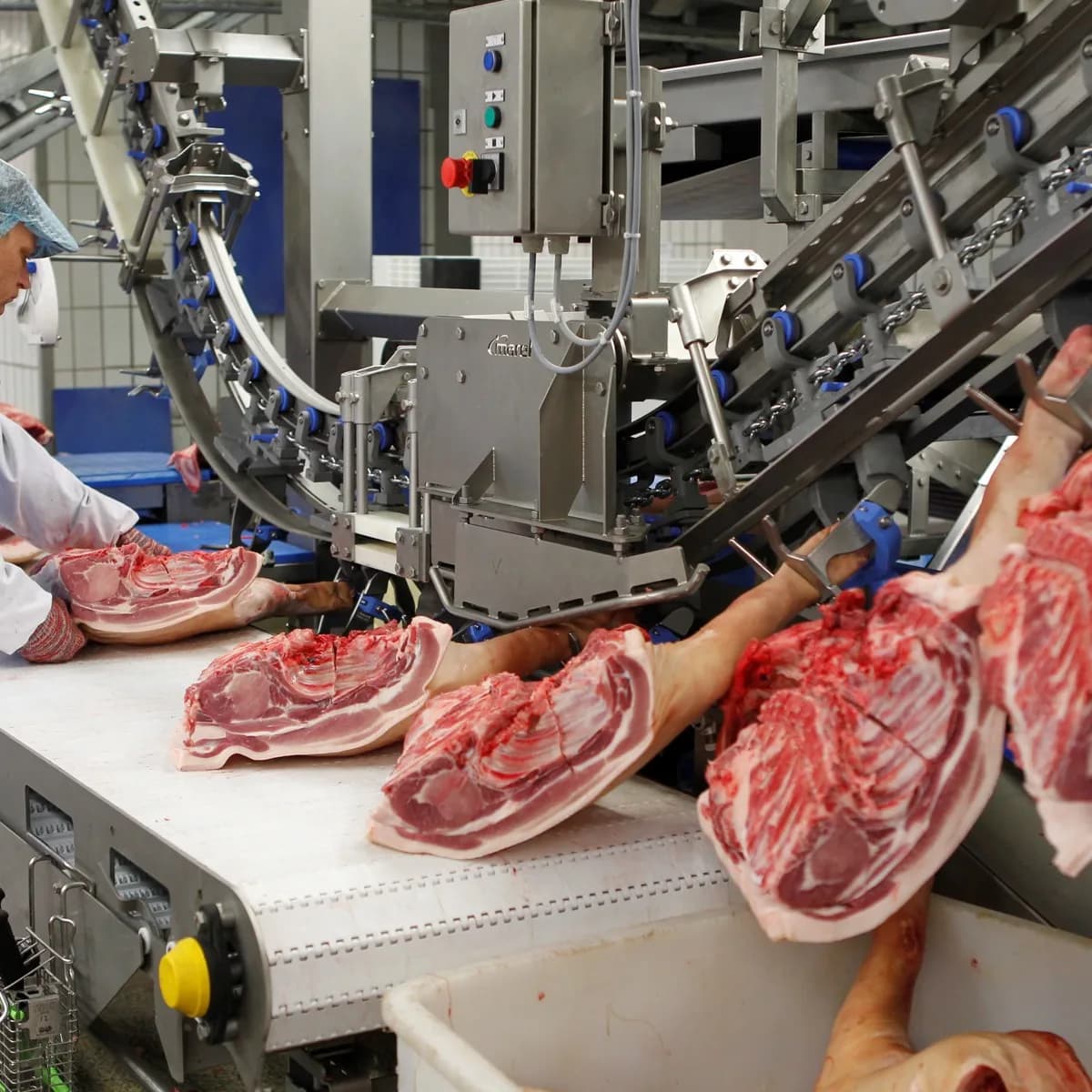
Cárnicas de la Litera cuts and processes pork at San Esteban de Litera, in the province of Huesca in north-eastern Spain. The catalogue is published in Spanish and English, with every entry carried as a product code and a written specification.
At a glance
The location, the catalogue and the terms a meat quotation is written in.
- Location
- San Esteban de Litera, Huesca, Aragón, Spain
- Activity
- Cutting and processing of pork, catalogued as coded specifications for professional buyers
- Catalogue
- 80 coded specifications across 6 product families
- Condition
- 61 specifications listed chilled, 80 listed frozen
- Customs classification
- Combined Nomenclature headings 0203, 0206, 0209, 0504; the subheading that applies depends on the cut and its presentation
- Catalogue languages
- Spanish and English, including the cut, bone, rind and condition attributes of each code
- Intended readers
- The catalogue is organised for retail, foodservice, industrial processing, importers and distributors
- What a quotation needs
- Pricing a meat enquiry takes four points: the code, the quantity, the condition and the destination
What the catalogue covers
6 product families, each holding numbered specifications with their own cut, bone, rind and condition attributes. Each code has its own product page in Spanish and English.
Pork Leg
Round and Serrano presentations with bone and rind, through to the boneless, rindless 3D–6D range of defatted legs.
Pork Shoulder
Fore-end, tennis-cut and bone-in rindless presentations, the defatted 3D–8D range and the collar cuts taken from the shoulder.
Pork Belly
Bone-in, sheet-ribbed, rind-on and rindless bellies, together with spare rib and riblet formats taken from the same primal.
Chops & Loins
Loin, back bacon and tenderloin in bone-in, rindless, chain-on and chain-off presentations, each coded as a separate specification.
Pork Trimming
Graded by lean-to-fat ratio from 90/10 to 30/70, plus collar and tenderloin trimmings for formulated and cured production.
Others
Bones, fats, rinds, feet, hocks, heads and offal, for rendering, broth and stock, and further processing.
The region we work in
San Esteban de Litera sits in La Litera, a comarca in eastern Huesca on the border between Aragón and Catalonia.
Aragón and the pork sector
Aragón is one of Spain's established pig-farming and meat-processing regions, with feed production, farms, slaughterhouses and cutting plants concentrated in the same corridor.
How meat moves out of the region
Meat produced in Aragón moves by road, either to the Mediterranean container ports or overland into other Member States. On any given sale, the Incoterms 2020 rule chosen allocates carriage, the delivery point, where risk passes and which party clears customs.
Who the catalogue is written for
Each kind of buyer reads the catalogue differently, so each has its own page setting out the points that programme has to fix in the specification.
Retail
Weight bands, trim standard, presentation and shelf format are the points a retail programme has to fix before it can be priced on a recurring basis.
Foodservice
Portion weight, uniformity and preparation are what a kitchen specification has to pin down, so that one code always describes the same cut.
Industrial processing
Raw material described by lean-to-fat ratio and preparation: the terms in which formulated, cooked and cured production buys its pork.
Importers & distributors
Mixed-code consignments, destination documentation and container configuration are the variables an importer or distributor has to settle before a quotation can be built.
What an enquiry has to cover
The same points arise whether the enquiry is a single code or a mixed container, and each one has to be settled in writing before a price means anything.
- EnquirySend the product codes or a description of the cut, the quantity, the chilled or frozen condition and the destination country.
- SpecificationEach code records its own cut, bone, rind and condition attributes; agreeing which code applies gives both sides one written reference.
- Packing and markingCarton and pallet configuration, labelling and the language of the label change the shape of an offer, so they belong in the enquiry rather than after it.
- Commercial termsThe Incoterms 2020 rule and its named place allocate carriage, the delivery point, risk transfer and customs formalities. They say nothing about payment, which is agreed separately, so both belong in the enquiry.
- Destination documentationWhich certificates and documents a consignment needs is set by the importing country, not by the seller, and is worth establishing before contracting rather than after loading.
What buying from an EU establishment means
These obligations apply to any establishment placing products of animal origin on the market from Spain. Each of them generates records a buyer can ask a prospective supplier for.
Approval and public listing
Article 4(2) of Regulation (EC) 853/2004 requires an establishment handling the products of animal origin covered by its Annex III to be approved by the competent authority, and Annex II Section I requires the approval number to appear in the identification mark applied to the packaging. Article 148 of Regulation (EU) 2017/625 requires the competent authority to keep a public list of approved establishments, against which a number given by any prospective supplier can be checked.
Hygiene and HACCP
Regulation (EC) 852/2004 requires permanent procedures based on HACCP principles. Commission Implementing Regulation (EU) 2015/1375 lays down specific rules on official controls for Trichinella in meat, including the sampling regime applicable to pig meat.
Traceability and certificates
Article 18 of Regulation (EC) 178/2002 requires one-step-back, one-step-forward traceability. Certificates for third countries follow the model agreed with the destination and are applied for in Spain through CEXGAN; TRACES NT documents intra-EU movements and import controls.
Send an enquiry
Tell us what you are buying, in what quantity, in what condition and where it is going. Code, quantity, condition and destination are the four points any meat quotation is built on.
Contact us
Write with the product codes or a description of the cut, the quantity, the destination country and port, and the Incoterms rule you work on.
Contact export salesRequest a quotation
A structured form covering product, volume, packing and destination, so that everything needed to price an enquiry is set out in one go.
Request a quotationFurther reading for buyers
View allTechnical guides covering the requirements behind this page, written for import and quality teams.
Market access15 sources
Why Spain leads EU pork production and exports
How Spain became the EU's largest pigmeat producer and exporter, why Aragón and Cataluña dominate the herd, and the two regulatory routes a consignment can take out of Spain.
Specifications & cuts12 sources
Pork primal cuts: an international guide
How the main pork primals are cut and named across EU, US and Asian markets, and why international contracts should identify goods by tariff code and written specification rather than by cut name.
Export documentation12 sources
Pork HS codes explained
How HS heading 0203 divides pork into six international subheadings, what carcase, bone-in ham and "other" actually mean, and where the EU’s 8-digit CN code takes over.